
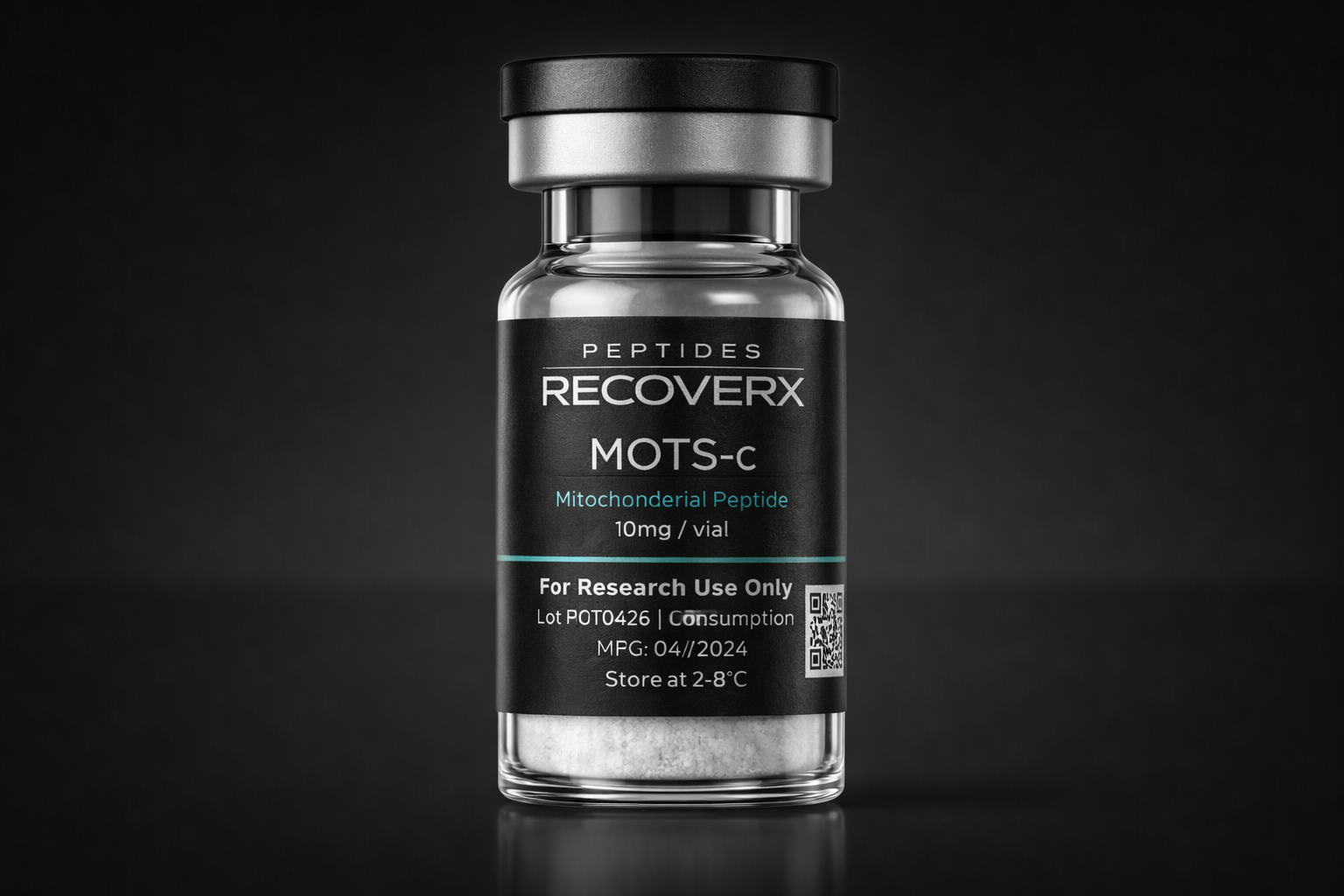
MOTS-c – 10mg
$119.00
Product Specifications
- 10mg per vial
- Lyophilized powder
- High-purity compound (≥99% where applicable)
MOTS-c (Mitochondrial Open Reading Frame of the 12S rRNA-c) is a mitochondrial-derived peptide that plays a significant role in cellular energy regulation, metabolic homeostasis, and adaptive stress response. Unlike many peptides that originate from nuclear DNA, MOTS-c is encoded within the mitochondrial genome, positioning it uniquely within the field of metabolic and longevity research.
Mitochondria are central to cellular energy production, and MOTS-c is studied for its ability to influence how cells respond to metabolic stress, regulate energy utilization, and maintain internal balance under varying physiological conditions.
In research settings, MOTS-c has been shown to interact with pathways involved in glucose metabolism, insulin sensitivity, and fatty acid utilization. It is believed to activate cellular processes that enhance metabolic flexibility, allowing cells to adapt more efficiently to changes in energy demand and nutrient availability.
One of the key mechanisms associated with MOTS-c is its influence on AMP-activated protein kinase (AMPK), a critical regulator of energy balance. Activation of AMPK supports increased glucose uptake, improved mitochondrial function, and enhanced fat oxidation, making MOTS-c a central focus in metabolic research.
MOTS-c is commonly studied in research exploring:
- Mitochondrial function and efficiency
- Insulin sensitivity and glucose regulation
- Fat metabolism and energy utilization
- Cellular stress adaptation
- Longevity and metabolic resilience
Its ability to act as a mitochondrial signaling peptide allows it to bridge communication between the mitochondria and the nucleus, influencing gene expression and cellular behavior in response to metabolic conditions.
MOTS-c is particularly valuable in advanced research models examining how cellular systems respond to stress, aging, and metabolic demand, making it a key compound in both performance and longevity-focused studies.
RecoverX MOTS-c is supplied as a lyophilized powder, preserving structural integrity, stability, and potency prior to reconstitution. Each vial is manufactured and handled under strict quality standards to ensure purity, consistency, and reliability in research applications.
Key Research Areas
- Mitochondrial function
- Insulin sensitivity
- Energy metabolism
- Fat oxidation
- Cellular stress response
Storage Instructions
Store in a cool, dry environment.
Refrigeration is recommended after reconstitution.
Reviews
There are no reviews yet.