BPC-157 (Body Protection Compound-157) is a synthetic peptide derived from a naturally occurring protein found in gastric juice. It has been extensively studied for its role in tissue repair, angiogenesis (formation of new blood vessels), and inflammatory response modulation, making it one of the most widely researched peptides in recovery-focused models.
In research environments, BPC-157 is investigated for its ability to support healing across multiple tissue types, including muscle, tendon, ligament, and gastrointestinal structures. Its mechanism involves interaction with various growth factor pathways and signaling cascades associated with cellular repair and regeneration.
One of the distinguishing characteristics of BPC-157 is its broad systemic activity. Rather than targeting a single pathway, it appears to influence multiple biological processes simultaneously, including nitric oxide (NO) signaling, vascular integrity, and collagen formation, all of which contribute to accelerated recovery and tissue resilience.
BPC-157 is commonly studied in research focused on:
- Musculoskeletal injury repair
- Tendon and ligament healing
- Inflammation modulation
- Gastrointestinal integrity and recovery
- Angiogenesis and blood flow support
Its ability to promote enhanced blood vessel formation and improved circulation is a key factor in its role in recovery research, as it supports nutrient delivery and waste removal at the site of tissue stress or injury.
Additionally, BPC-157 has been explored for its protective effects within the gastrointestinal system, where it may support the integrity of the gut lining and aid in recovery from various forms of internal stress or damage.
Due to its stability and resistance to enzymatic degradation, BPC-157 is considered highly durable in research conditions, allowing for consistent and repeatable observations across a range of experimental models.
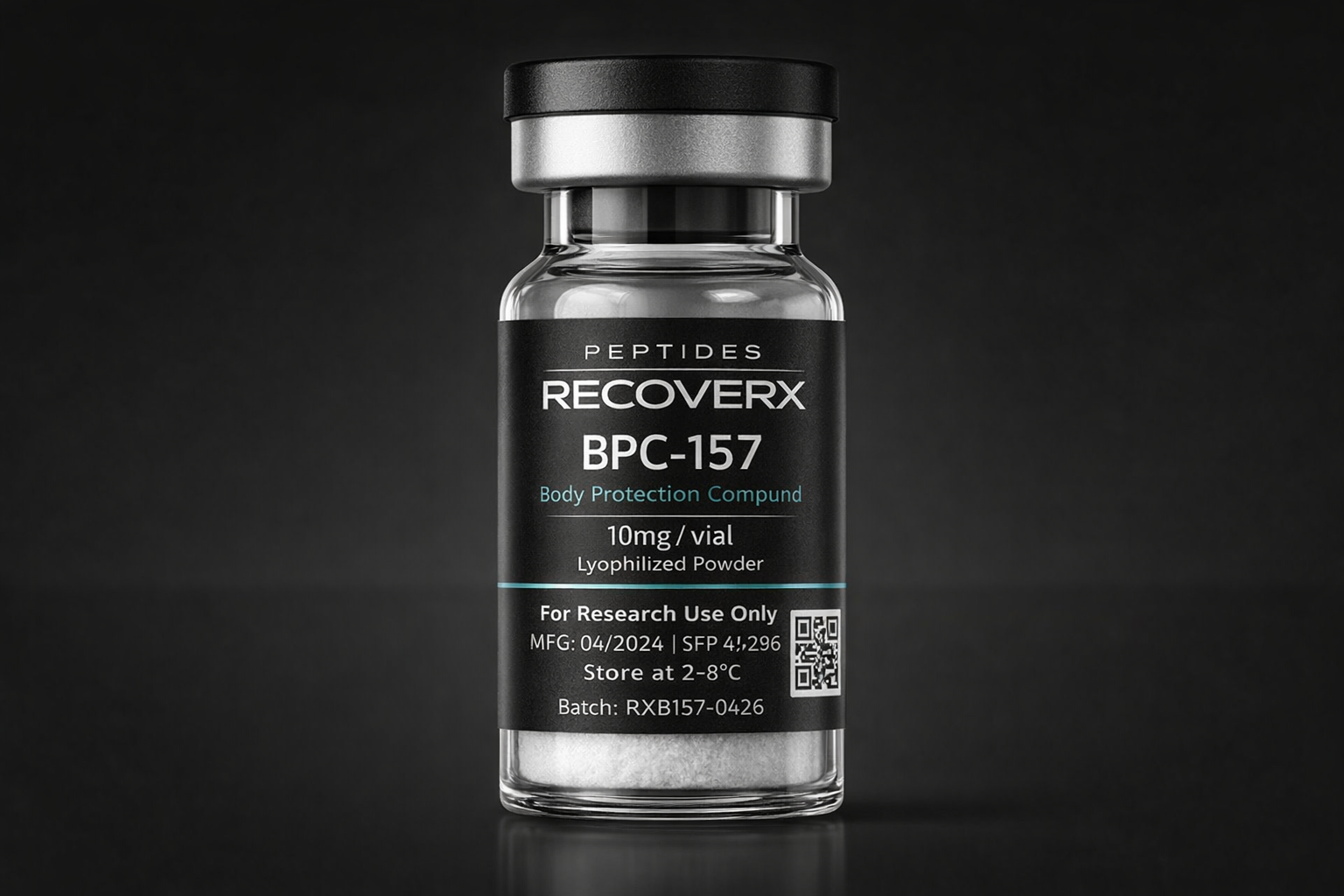
RecoverX BPC-157 is provided as a lyophilized powder, preserving structural integrity, stability, and potency prior to reconstitution. Each vial is produced and handled under strict quality control standards to ensure purity, consistency, and reliability.
Key Research Areas
- Tissue repair and regeneration
- Tendon and ligament healing
- Inflammation response
- Angiogenesis and blood flow
- Gastrointestinal support
Storage Instructions
Store in a cool, dry environment.
Refrigeration is recommended after reconstitution.
Important Notice
This product is intended for research use only.
Not for human consumption.
Be the first to review “BPC-157 – 10mg”
Related products
Reviews
There are no reviews yet.